
Silentrecon’s May 2026 Briefing: Addressing Critical Exposure Trends in Municipal Infrastructure
monthly briefing may 2026
5/6/20267 min read

Introduction to Critical Exposure Trends
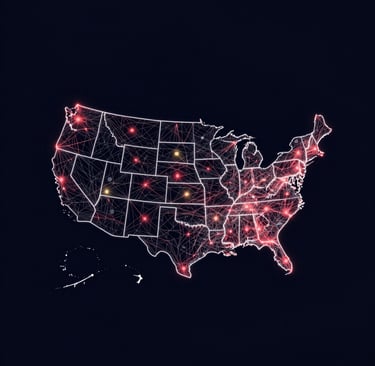
The recent findings from Silentrecon's May 2026 briefing reveal significant critical exposure trends affecting municipal infrastructures. This briefing highlights various vulnerabilities across urban landscapes, emphasizing the implications these trends have for local governance and urban management. By identifying and addressing these exposures, municipalities can enhance their resilience against a range of threats, from natural disasters to infrastructure decay.
One key trend involves the increasing frequency of climate-related events, which have highlighted the inadequacies of existing infrastructure. Municipal systems, particularly those that have not been modernized or adequately maintained, are becoming more susceptible to flooding, heatwaves, and other extreme weather scenarios. These challenges underscore the urgent need for a comprehensive evaluation of urban infrastructure, ensuring that it not only meets current demands but is also future-ready.
Additionally, the briefing points to a rising trend in cyber vulnerabilities within municipal systems. As cities increasingly integrate technology into their services, safeguarding sensitive data and operational systems has emerged as a critical concern. Local governments, therefore, must prioritize cybersecurity measures to protect against potential breaches that could disrupt essential services, from water supply to emergency response functionalities.
This briefing also emphasizes that these critical exposure trends require collaborative efforts across various sectors. Local governments must engage with private sector partners and community stakeholders to foster a comprehensive approach to infrastructure resilience. Through shared insights and resources, cities can better anticipate and respond to emerging threats, ensuring the sustainability of urban environments.
Through these insights from the May 2026 briefing, stakeholders will gain a clearer understanding of the importance of addressing critical exposure trends. By focusing on both infrastructure vulnerabilities and technological integrations, local governance can pave the way for more secure and resilient urban management practices.
Understanding Unpatched Perimeter Services
Unpatched perimeter services represent a significant vulnerability within municipal infrastructure, posing serious threats to public safety and service continuity. These services, which are often left without timely updates, can include firewalls, routers, and other network devices that establish the boundary between the internal system and external threats. When these components go unpatched, they create exploitable gaps that malicious entities can target.
The implications of these vulnerabilities extend far beyond mere data theft. Cybercriminals can exploit unpatched perimeter services to execute various attacks, such as Distributed Denial of Service (DDoS) attacks, which can cripple municipal services. By targeting these vulnerabilities, attackers can disrupt essential services like water supply systems, transportation networks, and emergency response systems, resulting in widespread chaos and endangering public well-being.
Moreover, the presence of unpatched perimeter services can also lead to unauthorized access to sensitive information. Criminals can gain entry into municipal databases, jeopardizing everything from citizen records to crucial operational data. This unauthorized access not only threatens the integrity of municipal services but also undermines the trust that the public places in these essential systems.
The risks associated with unpatched perimeter services are further exacerbated by the lack of security awareness and resources within many municipal organizations. Smaller municipalities, in particular, may struggle to keep up with the fast-paced evolution of cyber threats and may lack the technical expertise required to address these vulnerabilities effectively. As such, it is vital for municipal authorities to prioritize the regular patching and updating of their perimeter services as part of a comprehensive cybersecurity strategy.
The Impact of Exposure Trends on Municipal Operations
The ongoing analysis of exposure trends reveals significant ramifications for municipal operations, particularly regarding service delivery and infrastructure maintenance. Identifying these trends allows municipalities to anticipate potential challenges, enabling them to adopt proactive measures aimed at minimizing disruption and enhancing service efficiency.
In recent years, an uptick in severe weather events—ranging from flooding to heavy snowfall—has been observed. These climate-related changes strain local services by increasing the demand for prompt response measures, which often exceed the operational capacities of municipal infrastructure. Such exposure trends can lead to delays in roads and bridges maintenance, emergency services response, and public health interventions, ultimately degrading the quality of life for residents.
Furthermore, municipalities are facing financial implications due to the need for increased budget allocations to address these evolving risks. Enhanced expenditures for maintenance and upgrades necessitated by exposure trends can divert funds from other critical areas such as education and community services. The implications of these trends, therefore, extend beyond immediate operational challenges to encompass long-term financial burdens that municipalities may not be equipped to handle effectively.
Moreover, as exposure trends evolve, municipalities are compelled to invest in updated technologies that can facilitate better monitoring and management of critical infrastructure. This technological adaptation demands significant financial resources and training for personnel, further complicating the operational landscape. Consequently, municipalities must navigate a complex array of challenges emanating from exposure trends, which can hinder their ability to maintain consistent and reliable service to the communities they serve. Understanding these dynamics is pivotal in formulating effective strategies to safeguard municipal operations against unforeseen disruptions caused by these exposure trends.
Risk Assessment Methodologies for Municipal Infrastructures
Municipalities are increasingly recognizing the importance of robust risk assessment methodologies to protect and manage their infrastructures effectively. The complexity of today's urban environments necessitates a multifaceted approach to evaluate vulnerabilities associated with various critical assets, including roads, bridges, water systems, and public buildings. This section outlines significant methodologies that municipalities may adopt to conduct thorough infrastructure risk assessments.
One widely utilized approach is the qualitative risk assessment, which focuses on identifying potential hazards and the likelihood of their occurrence based on expert judgment and historical data. This method is particularly advantageous for municipalities with constrained resources, allowing them to prioritize risks without extensive quantitative analysis. Common qualitative techniques include workshops and focus groups involving stakeholders from different sectors, which can reveal insights about recent failures or vulnerabilities.
In conjunction with qualitative assessments, quantitative risk methodologies play a critical role in delivering comprehensive and data-driven evaluations. Techniques such as probabilistic risk assessment utilize statistical models to forecast potential incidents and their impacts. Municipalities can benefit from performance indicators and historical failure rates to calculate the probability of failures, accompanied by risk consequence analyses to gauge the economic or social impact of those failures.
Furthermore, a combined approach, incorporating both qualitative and quantitative methodologies, can enhance the robustness of risk assessments. This hybrid strategy allows municipalities to leverage subjective insights gained from stakeholders while validating these insights with empirical data and analysis. Such a comprehensive risk assessment process ensures that municipalities can develop informed mitigation strategies tailored to their specific needs.
In conclusion, the successful implementation of risk assessment methodologies is essential for municipalities to evaluate their infrastructures accurately. By employing both qualitative and quantitative methods, they can create an actionable framework that enhances their resilience and addresses critical exposure trends effectively.
Actionable Recommendations for Reducing Risk
Municipalities are increasingly facing security challenges related to unpatched services and rising exposure trends. To enhance their security posture, it is crucial for local governments to implement actionable strategies that address these vulnerabilities. The following recommendations have been specifically designed to help municipalities reduce risks and improve the overall resilience of their infrastructure.
First, conducting regular vulnerability assessments is essential. These assessments allow municipalities to identify unpatched services and potential exposure points within their infrastructure. By employing automated scanning tools alongside manual audits, municipalities can prioritize risks based on their severity and address them effectively. This proactive approach not only mitigates existing vulnerabilities but also helps establish a baseline for ongoing security assessments.
Secondly, municipalities need to establish robust patch management protocols. Assigning responsibility for timely updates ensures that critical systems and applications are consistently maintained. Consider adopting a framework for patch management that includes scheduled patches, emergency updates for zero-day vulnerabilities, and comprehensive documentation of actions taken. This process should be incorporated into the broader incident response plan to ensure swift actions can be taken if a vulnerability is exploited.
Furthermore, training and awareness programs for municipal staff are vital. Employees often serve as the first line of defense against security threats. Providing comprehensive security awareness training will equip staff with the knowledge to recognize social engineering attacks, suspicious activities, and the importance of reporting potential incidents promptly. Continuous education helps foster a culture of security within the municipality.
Lastly, establishing partnerships with other agencies can enhance resilience. By collaborating with cybersecurity experts and sharing intelligence about emerging threats, municipalities can stay informed about best practices and innovations in security technologies. Cooperative efforts can lead to more effective resource allocation and quicker responses to incidents.
By implementing these actionable recommendations, municipalities can significantly reduce risks associated with unpatched services and bolster their defensive capabilities against the evolving landscape of threats.
Case Studies of Municipal Responses
Municipalities across the globe have faced significant challenges in their infrastructure as a result of outdated systems and increasing demands. Recent Silentrecon briefings have prompted many local governments to take proactive measures, leading to successful interventions in several key areas. These case studies exemplify how municipalities have effectively addressed critical exposure trends.
One notable example comes from the city of Springfield, which implemented a comprehensive asset management plan. Responding to earlier briefings, Springfield invested in advanced monitoring technology to assess the condition of its water infrastructure. As a result, the municipality was able to identify potential leakages before they escalated into costly repairs. Utilizing real-time data, the city not only reduced its water loss by 20% within the first year but also improved community trust by communicating transparently about infrastructure investments.
In another case, the town of Riverton initiated a participatory budgeting process, empowering community members to identify and prioritize infrastructure needs. By following insights from previous Silentrecon reports, Riverton conducted public forums where residents voiced concerns regarding road safety and public transportation. As a result, voters allocated funds towards upgrading street lighting and improving bus services. This collaborative approach led to higher levels of civic engagement and satisfaction among the residents, proving that active participation can lead to effective and responsive municipal strategies.
Finally, the initiative of Clearwater in creating a comprehensive disaster preparedness program illustrates the impact of proactive measures in infrastructure resilience. Following recommendations from Silentrecon briefings, Clearwater established an inter-departmental task force focusing on emergency response strategies. This task force not only enhanced the municipality's physical infrastructure but also educated the community about disaster preparedness, resulting in a more resilient urban environment.
Conclusion and Call to Action
In reviewing the critical exposure trends in municipal infrastructure presented in Silentrecon’s May 2026 Briefing, it becomes evident that local governance bodies face unprecedented challenges. The vulnerabilities identified not only threaten the structural integrity of essential services but also the safety and well-being of communities. Addressing these vulnerabilities demands urgent attention from municipal leaders and stakeholders alike.
The data and insights outlined highlight the pressing need for a proactive approach. Stakeholders must recognize that integrating risk management strategies into the framework of municipal infrastructure is no longer a choice, but a necessity. A zero-tolerance approach to risks must be adopted to safeguard assets and, most importantly, the lives they serve. As our cities evolve and face growing pressures from climate change, population growth, and technological shifts, the resilience of municipal systems becomes paramount.
Moreover, collaboration among various levels of government, private sector partners, and local communities is vital in fortifying infrastructure against potential threats. By fostering partnerships and pooling resources, municipalities can develop comprehensive strategies that not only identify and mitigate risks but also enhance overall sustainability. It is urgent that leaders take decisive action, implement best practices, and commit to ongoing training and education surrounding infrastructure vulnerabilities.
In conclusion, the issue of vulnerability in municipal infrastructures is critical, and the time to act is now. Municipal leaders must prioritize the safety of their communities and proactively address these challenges. Together, stakeholders have the power to transform our cities into resilient environments, ensuring they are equipped to handle the challenges of today and tomorrow. Let us take firm steps towards a more secure municipal future.
Contact
Reach out for secure cyber defense support
Request Sovereign Audit
contact@silentrecon.net
© 2025. All rights reserved.